



🏠 ALL YOU NEED TO KNOW BEFORE BUYING A HOUSE
Complete guide with keys to avoid making mistakes when buying your home
Buying a home is not just any old thing. It is one of the most important decisions of our lives. Behind it there are years of savings, effort, sacrifices and many dreams. We look for the best neighbourhood, a good orientation, enough space, pleasant common areas, nice details of finish…
But there is something that almost nobody pays attention to, however it can ruin your day-to-day life: the interior comfort.
Especially acoustic and thermal insulation.
ACOUSTIC AND THERMAL INSULATION IS THE GREAT FORGOTTEN.
You can’t see it; it isn’t noticeable in photos…
But you notice it every day.
In the silence. In the temperature. In how you live your home.
🔇❄️ Acoustic and thermal: two sides of the same comfort
Both types of insulation are essential for a healthy and efficient house:
- Thermal insulation protects us from cold and heat, reducing energy consumption.
- Acoustic insulation protects us from noise, improving rest and quality of life.
Although they are different, many materials and building solutions serve both purposes. That is why it is important to understand them together.
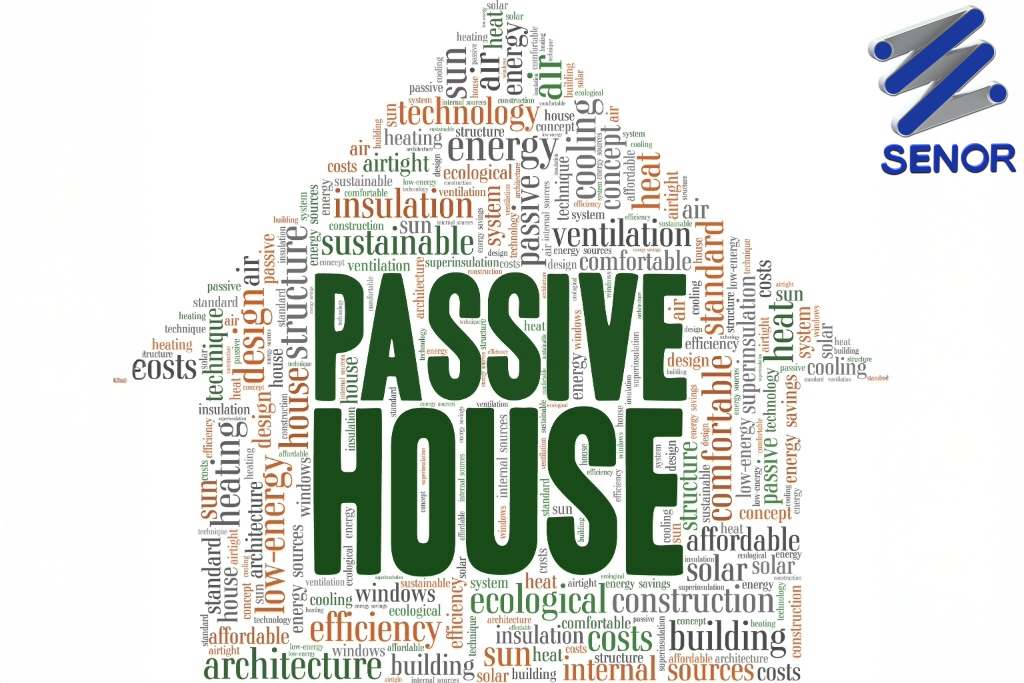
🏡 What about passive houses? A lot of thermal insulation, but… What about acoustic insulation?
Passive houses or Passivhaus focus on achieving maximum energy efficiency: large thicknesses of thermal insulation, triple-glazed windows, infiltration control, heat recovery…
All perfect for maintaining the temperature… but acoustics are often neglected.
A house can have almost zero energy consumption and still be an acoustic hell if no thought has been given to structure-borne, airborne or vibration noise.
👉 Don’t be sold efficiency without comfort. Ask for both.
🧱 Why do most new houses still have noise problems?
Despite the fact that the Technical Building Code (CTE) requires certain levels of acoustic and thermal insulation, the reality is:
- Many developers only comply with the minimum.
- The building specifications often omit crucial details.
- Visual aspects are prioritised over real well-being.
🧾 Real example: what a quality report does NOT tell you
In recent months we have received a large number of queries from people who, before buying their future house, check the quality report… and find generic descriptions such as these:
“Exterior wall with cavity wall construction and/or holed brick on the outside and high resistance laminated plaster panels on the inside, air chamber and rock wool thermal insulation…”
“High-strength gypsum plasterboard roofing with rock wool insulated cavity…”
“High-strength gypsum plasterboard roofing with rock wool insulated cavity….”
Does this seem sufficient? At first sight, yes. But let’s break it down in detail:
| Element (any: partition wall, roof, facade…) | Is it well specified? | What should you ask? |
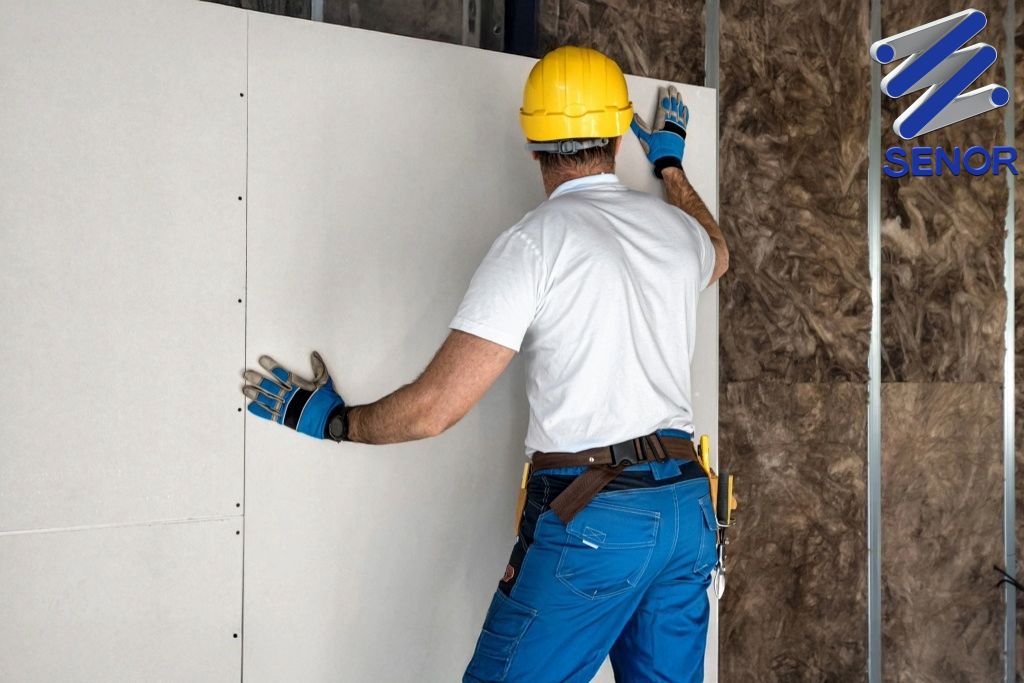
All | In many cases only ‘laminated plasterboard with rock wool’ is indicated or not mentioned at all | How many panels are there on each side? How thick are they? What type of metal structure is used? Are acoustic dampers used? Are acoustic strips used? What type and thickness of insulation is used? ¿Has the whole system been tested? |
This is the kind of information that does not usually appear… and it makes the difference between living in silence or living with noise.
And the same goes for thermal insulation: you can’t see it, but it conditions your well-being, your energy bill… and how you are going to live in your home all year round.

📋 Key questions for any construction element (facades, partitions, ceilings, floors)
Before accepting any construction system in your future house, make sure you get clear answers to these common questions:
- What type of gypsum plasterboards are used?
- How many boards are there on each side? How thick is each board?
- What type of metal structure is used?
- What insulation (material) is installed (make, model, density, thickness)?
- Are acoustic dampers used?
- Are perimeter acoustic strips installed?
- What is the total thickness of the system once installed?
- Is there a real acoustic test of the system and what dB value does it provide?
🧠 Specific questions per building element
🧱 Facades and wall linings
- Is it gypsum plasterboard or brickwork?
- Is there a thermal break in the external facade?
🧱 Internal partitions
- Are these partitions between houses or internal partitions?
- Is acoustic reinforcement provided between bedrooms or wet areas?
🧱 Ceilings
- Are the profiles TC-47, TC-60 or saw profiles?
- Is there a double structure (primary and secondary) or a single structure?
🧱 Flooring
- Is there a floating screed?
- Is there a floating screed?
📏 Height between slab floors
- Does it allow complete solutions with cavity and double structure?
🚪 Doors
- Is the entrance door acoustically rated?
- Is the entrance door acoustically rated?
🧭 Location of noisy elements
- Are there lifts, garage doors or technical rooms nearby?
- Have they been insulated with suitable acoustic systems?
🌬️ Air-conditioning units: another common source of noise
- Where are the outdoor units installed?
- Do they have quality anti-vibration dampers?
- Do they have quality anti-vibration dampers?
- What type of pipes and ducts are used and are they insulated?
- Is the machine close to the rooms?
- Is there vibration transmission to the building?
🪟 Windows: the weak point of many facades
- What type of carpentry is installed (PVC, aluminium with RPT…)?
- Is it double or triple glazing? With which chamber?
- Is it double or triple glazing? With which chamber?
- Do they have low emissivity treatment for thermal insulation?
🧊 How do I know if my house is well insulated?
- Do they tell you the thickness of the insulation in walls and ceilings?
- Are there double or triple glazed windows?
- Do they tell you about the “thermal bridge”?
- Is the facade insulated on the outside?
- What is the energy rating?
🧊 And how do I know if my house will be well insulated acoustically?
- Do you use acoustic dampers in ceilings and walls?
- Do you have false ceilings with cavity walls?
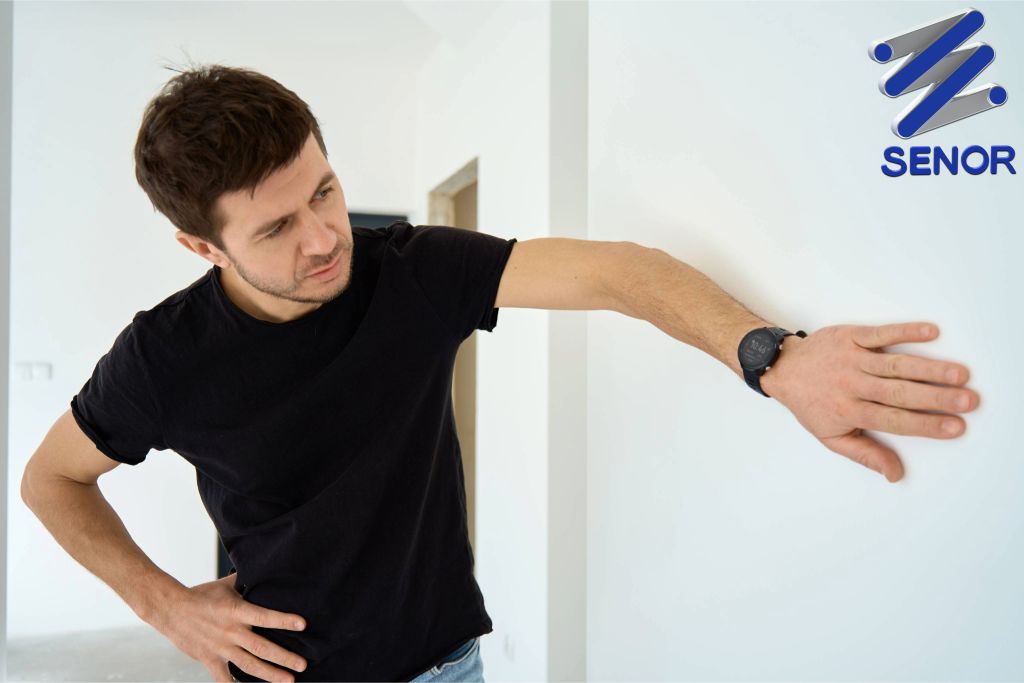
- Do the walls sound hollow when you knock on them?
- Do you notice elastic bands or perimeter seals?
- Is it close to lifts or technical rooms?
🧊 Relation between thermal and acoustic insulation
| Element | Thermal improvement | Acoustic improvement |
| Rock wool | ✅ Excelent | ✅ Excelent |
| Double plasterboards | ✅ Medium | ✅ High |
| Double glazed windows | ✅ Very good | ✅ Very good |
| Acoustic perimetral bands | ✅ Excelent | ✅ Excelent |
| Acoustic dampers | ✅ Very good | ✅ Excelent |
❌ Most common mistakes when buying a house without considering acoustics
| Error | Consequence | How to avoid it |
| Not reading the specifications carefully | Basic systems without details | Ask for technical sheets or tests |
| Do not ask about partition walls | Hollow walls, no mass or insulation | Confirm structure, boards, insulation and dampers |
| Not assessing the ceiling | Noises from above or installations | Order suspended ceilings with decoupled system |
| Relying only on double glazing | Insufficient sound insulation | Request thickness and acoustic rating specifications |
| Buying near noisy and uninsulated areas | Constant structure-borne noise | Verify the location and specific systems of these areas |
| Thinking that thermal and acoustic insulation are equal | Common confusion | Verify specific solutions for each type of insulation |
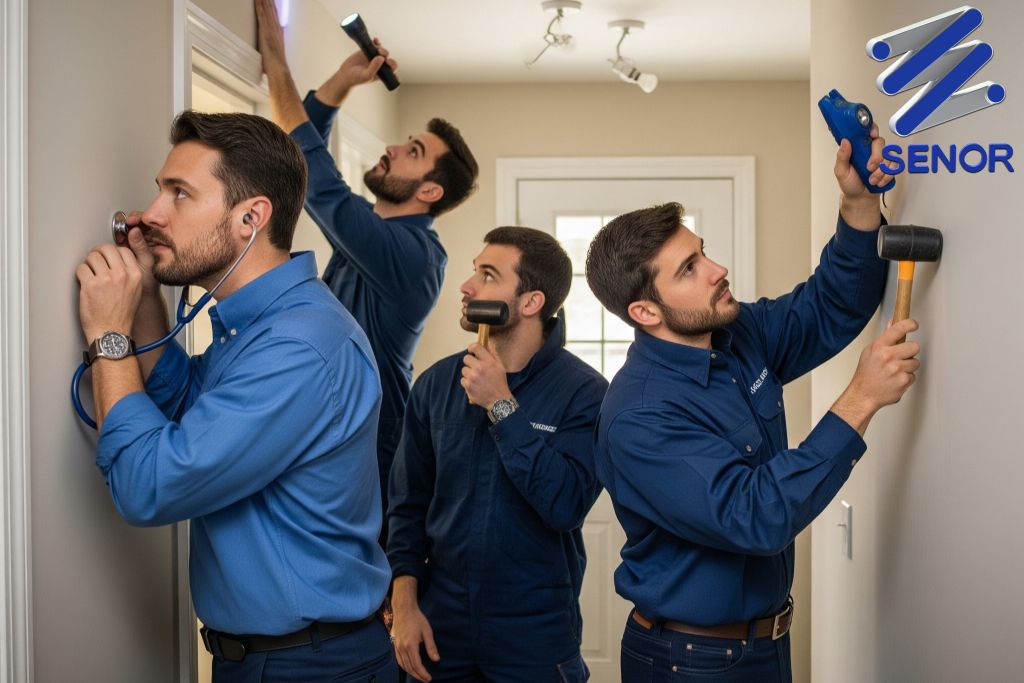
👷 How to detect acoustic deficiencies during a visit to the house
- Be quiet and listen carefully.
- Knock on walls and ceilings: if they sound hollow, be suspicious.
- Look for false ceilings.
- Check for connections between walls, ceilings and floors.
- Check the thickness of partition walls.
- Perform noise tests between rooms.
- Check if they have used insulating materials (rock wool, minerals, etc.).
- Ask neighbours or technicians if there are noise complaints.
- Check whether lifts, garage doors or air-conditioning equipment generate noise and whether they are correctly decoupled.
- Make noise comparisons by opening and closing windows and doors.
- Ask to be accompanied by detail-oriented family members or friends.
- Be critical and attentive.
✅ Final tips before buying a house
- Don’t just look at the building specifications: investigate further.
- Demand information on acoustic and thermal insulation.
- Ask for technical references, tests, data sheets, brands of materials.
- If you can, seek advice from an independent technician.
- Remember that interior comfort is key so that your dream home does not turn into a nightmare.
📣 Do you need help?
At SENOR we have been manufacturing high performance acoustic solutions for more than 30 years.
If you have any questions or need advice, you can contact our Technical Department directly:
📧 tecnico@senor.es
📞 +34 607 411 620 (pone or WhatsApp)
We will be happy to help you.